Ask anyone to picture an E-Type and they picture a Series 1: the glass-covered headlamps, the small mouth, the thin bumpers, the shape Jaguar launched in 1961. The market agrees with them. A good Series 1 is valued at £95,000; the Series 2 that followed it is £45,000, and the Series 3 V12 that ended the line is £60,000.
That is a large discount for cars that share the same basic shape and structure and, in the Series 2, the same 4.2-litre engine as the late Series 1. It is worth understanding where the discount comes from, because some of it is a fair price for real differences and some of it is fashion. The second kind is where a buyer can find value.
Three E-Types, three prices
The E-Type, generation by generation
Jaguar E-Type guide values, October 2026, for good, documented UK cars.
The order surprises people. The Series 2 is the car closest to the original, mechanically almost identical to a late 4.2 Series 1, and it is the cheapest of the three. The Series 3, the most changed car of the family, sits above it.
The Series 2: a Series 1 that lost its face
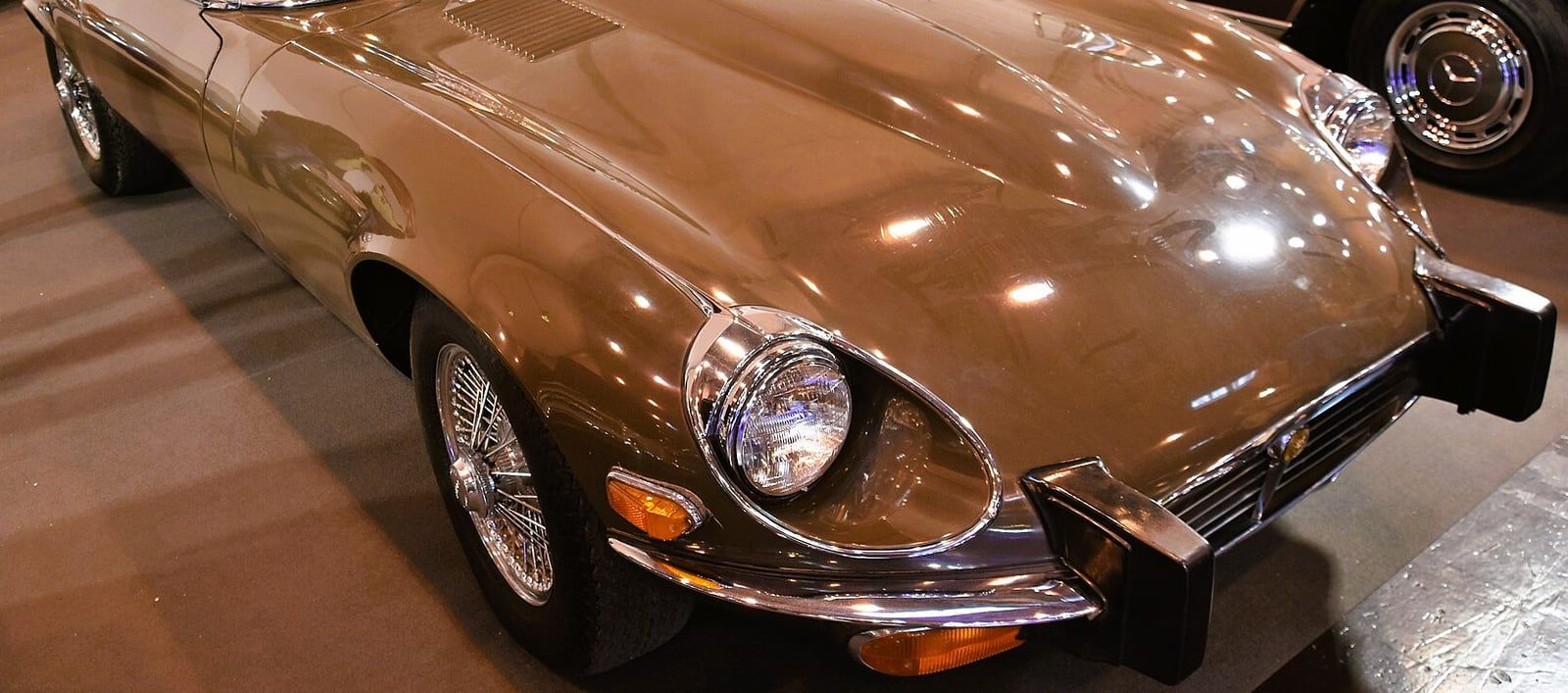
The Series 2 arrived for 1968 and ran to 1971. Most of what changed was driven by American safety rules. The glass headlamp covers went, the grille grew and twin electric fans were added for cooling, and a wraparound rear bumper, larger front indicators and tail lights moved below the bumpers appeared. Underneath it kept the 4.2-litre XK six and the improved gearbox that the late Series 1 had already received.
Those changes are almost all visual, and that is the whole story of its price. A Series 2 drives very much like the 4.2 Series 1 that preceded it, with better cooling for modern traffic. It is penalised for looking less like the car on the poster, not for being worse to own.
Between the two sits the car collectors call the Series 1½: the last 4.2 Series 1s of 1967 and 1968, which had already lost their headlamp covers but kept the small mouth and slim bumpers. They show how much of the E-Type story is about the face, and specialists treat a Series 1½'s correct, documented specification as the thing to check first.
Body style matters as well as generation. The roadster is generally the car the market pays most for, and the 2+2, with its longer wheelbase and taller roof, has long been the least sought after. A good Series 2 coupé is a very different purchase from a Series 2 roadster, so compare like with like before deciding which generation is cheap.
The Series 3: a different car with the same name
The Series 3 of 1971 is the bigger change. Jaguar fitted its new 5.3-litre V12, built every car on the longer wheelbase of the old 2+2, and added flared arches, a cross-slatted grille and wider tyres. There was no short-wheelbase coupé any more: the choice was a roadster or a 2+2, both on the long chassis.
It is softer, heavier and more of a grand tourer than the cars before it, and for years that was held against it. It is also smooth, effortless and genuinely fast. Buyers who want an E-Type to use rather than to look at increasingly pick this one, which is why it now sits above the Series 2. The automatic cars trade well below the manuals, a gap our earlier E-Type piece sets out alongside the matching-numbers cliff.
The Series 2 is penalised for its face. The Series 3 is rewarded for its engine.
Which one to buy
If you want the E-Type experience for the least money, a Series 2 roadster or coupé in good order is the most direct route: the classic six-cylinder car, with most of the Series 1's driving character, at under half the price. The things to check are the ones that matter on any E-Type: rust in the sills and floors, the condition of the rear suspension cage, and whether the engine, gearbox and chassis numbers match the factory record.
Whichever generation you choose, look underneath before anything else. Hagerty's E-Type buying guide points to rust around the rear wheel arches and at the join between the sill and the floor, and warns that heavy filler and thick underseal can hide a great deal of it. A restored car should come with photographs of the work, and a specialist inspection on a lift costs little next to a body repair.
If you want to drive it far and often, the V12 makes the stronger case. The cooling system needs to be in good health, because a 5.3-litre V12 under that bonnet runs warm in traffic, and the carburettors need a specialist who knows them. The roadster is the one the market wants; the 2+2 is the cheaper and more practical way in. As with the cheapest V12 Aston, the engine is the reason to buy and the reason to budget.
Neither car is a consolation prize. The original will always carry the premium for being first. The later cars carry most of what made it great, for a fraction of the money, and that is a better trade than the price gap suggests.