Line up the three classic Skyline GT-Rs by value and you have, almost exactly, lined them up by scarcity. Nissan built nearly 44,000 R32 GT-Rs, fewer than 17,000 R33s and fewer than 12,000 R34s. The R34 is the dearest, the R33 sits in the middle, and the R32 is the way in.
That sounds obvious, and in this market it is not. Scarcity usually needs a story before buyers will pay for it, and for years the R33 had the numbers without the story: rarer than the R32 and cheaper. The market has since corrected that. The interesting questions now are what each generation is for, and where inside each one the real money sits.
Three cars, one recipe
Mechanically the three generations are closer than their prices suggest. All three use the RB26DETT, a 2.6-litre twin-turbo straight-six, driving all four wheels through Nissan's ATTESA E-TS system, and all three were officially rated at the same 276bhp. What changed between them was the body around that hardware and the story the car came to carry.
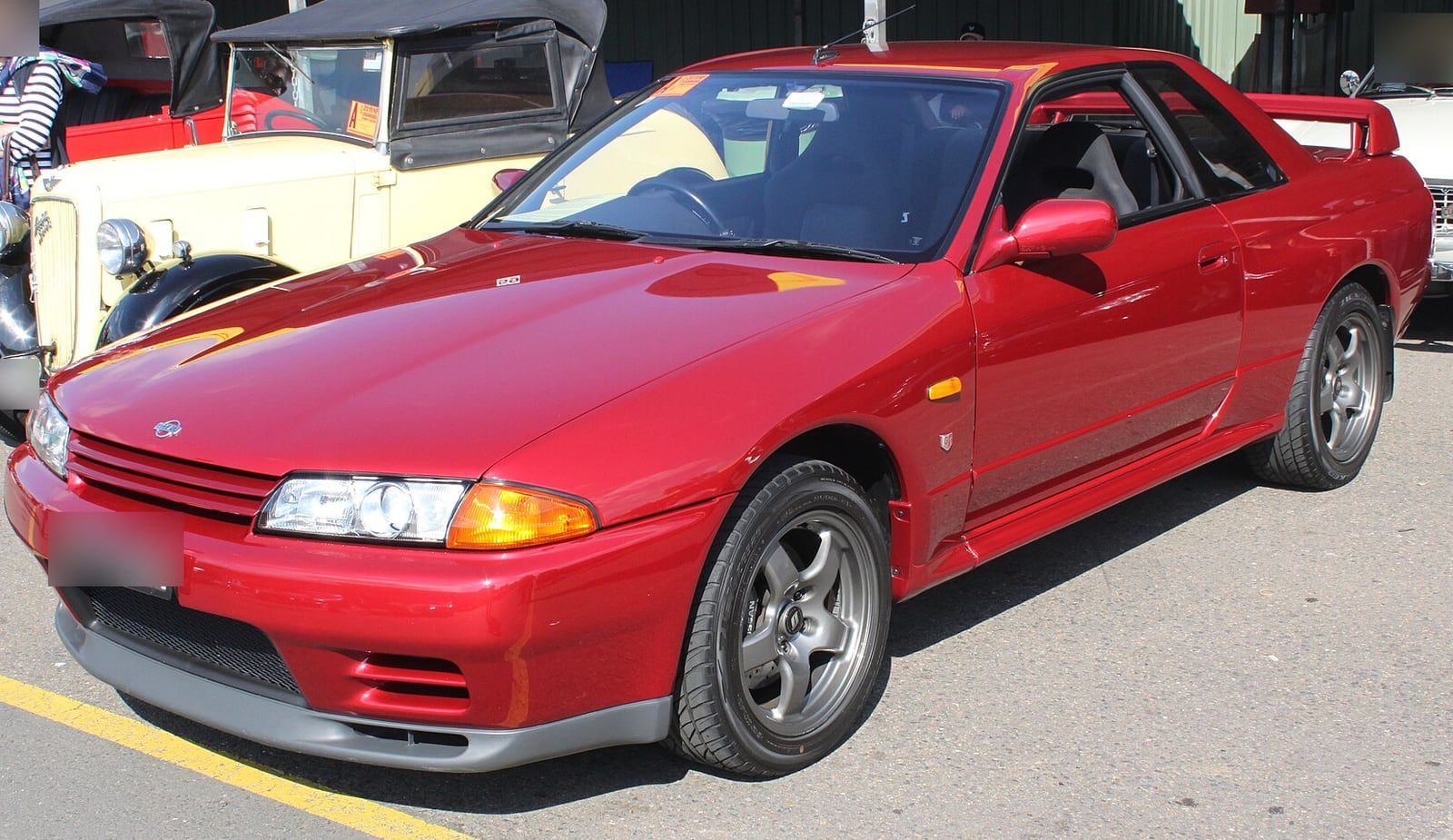
The R32 (1989–1994) was built to win Group A touring-car racing, and it did nothing else. It won all 29 Japanese Touring Car Championship races it started, and took the title every year from 1990 to 1993. The Australian magazine Wheels had already named it Godzilla in July 1989, and the name has followed every GT-R since.
The R33 (1995–1998) was longer and heavier, a better car on a long road and a less pure one on a short one. Nissan answered the doubters with a lap time: 7:59.887 around the Nürburgring Nordschleife, the first sub-eight-minute lap claimed for a production car.
The R34 (1999–2002) pulled the wheelbase back in, added a Getrag six-speed and a dashboard screen full of boost and temperature readouts, and arrived just as a generation of video-game players were learning what a GT-R was. The final run included 718 V-Spec II Nürs, which now sit far above everything else here.
Where the money sits
The Skyline GT-R ladder
Nissan GT-R guide values, October 2026, with GT-R production totals. Gold bars are the RB26 Skyline GT-Rs; blue is the R35 that replaced them.
Read the standard cars and the order is production, top to bottom: the R34 first, then the R33, then the R32. The R33's place is the one that has changed. The car that magazines judged softer and heavier than the R32 when it was new is now worth more than it, because the market has noticed how few were made.
The row that breaks the pattern is the R32 V-Spec. It is the same generation as the cheapest car on the chart and worth more than twice as much, within a few thousand pounds of a standard R34. Inside a large population, the scarce variant behaves like a separate car.
The GT-R is the rare case where the market prices scarcity almost exactly. The interesting money is in the variants.
Why scarcity works here
Each generation has a story to attach the number to. The R32's is the same one that lifts the E30 M3: a car built to satisfy a racing rulebook, with the race results to show for it. The R34's is the poster on the bedroom wall, and the knowledge that it was the last GT-R to carry the Skyline name. When the GT-R returned in 2007 as the R35, it was a separate model. The category closed in 2002, much as the air-cooled 911 closed in 1998.
The R35 completes the picture. It is faster than all three Skylines, around 48,000 were built over eighteen years, and production ended only in 2025. At £45,000 it sits below the R33, and it is the slowest-rising car on the chart. Performance is not what this market pays for. A closed number is.
The British footnote
Almost every Skyline GT-R in Britain is a personal import from Japan, but a small number were sold here new. In 1997 Nissan sold 100 R33 V-Specs converted for the UK by Middlehurst, and around 80 UK-specification R34 V-Specs followed. These cars have a documented history that no import can match, and the market treats them as their own small segment. If you are offered one, the paperwork proving it is genuine matters as much as the car.
The case for the R32
The cheapest car on the chart is also the one moving fastest: the R32 is up nine per cent over the past twelve months, against five for the R33. It is the purest of the three to drive, it has the racing record, and there are enough of them that a patient buyer can choose a good one rather than take whatever comes up. The gap to the R33 may well narrow again.
Generation also matters less than individual history. A GT-R that has spent twenty years being tuned, crashed and rebuilt is a different asset from an unmodified car with a clean Japanese auction sheet, whichever generation it is. The spread between those two is often wider than the gap between an R32 and an R33.
So which is the buy?
To drive, the R32. It is the original, the purest of the three, and at £38,000 for a good car it leaves room in the budget for the specialist inspection every GT-R needs.
For the scarcity case, the R33. It was built in well under half the R32's numbers, it has the same engine and four-wheel drive, and it is still under £50,000. The R34 is the icon, priced as one at £85,000 for a standard car before you reach the V-Spec versions.
Whichever you choose, what decides the purchase is not the generation. It is whether the car in front of you is what its seller says it is: original, honestly imported, and on the engine it left the factory with. That is the hard part of buying any of these cars.