Ferrari replaced the 308 with the 328 in 1985 and did the job properly. The V8 grew to 3.2 litres, power went from the last 308’s 240 bhp to 270 PS (266 bhp), and the car was built by a factory that had spent ten years learning how to make this shape well.
Most of the time the market agrees with the engineering. A good, usable 328 GTB is £88,000 in our catalogue. A good 308 GTBi is £55,000. If the question is simply which one costs more, the answer is usually the later car, and by a margin that buys a lot of servicing.
Usually is doing some work in that sentence. The 308 is not one car but four or five, built over ten years with two body materials and three versions of the engine. The dearest of them cost more than any 328, and they are the oldest.
Where the 328 wins
Line up the everyday cars and the order is what you would expect. Both 328s sit above every 308 we value, the coupés sit above the targas, and the fuel-injected 308 brings up the rear.
The everyday ladder
AutoIndex guide values for good, usable UK cars, October 2026. Gold bars are 328s; blue bars are 308s.
The bottom of that ladder is the easiest part to explain. Fuel injection arrived in 1980 to meet emissions rules, and power fell from the carburettor car’s 255 bhp to 214. Hagerty calls the 1980–82 GTBi and GTSi the underdogs of the 308 world, because they are the slowest, and puts a usable GTBi at around £50,000.
The four-valve Quattrovalvole of 1982 won most of the power back, at 240 bhp, and Hagerty reckons a very tidy, usable QV GTB costs around £65,000. Then came the 328, with more displacement, more torque and the accumulated fixes of the 308’s decade in production. It is the most complete of the small V8 Ferraris of the era, and it is priced like it.
Within the 328 range, the coupé is the scarce one. Ferrari built 1,344 GTBs against 6,068 targa-topped GTSs, and the GTB is £88,000 against the GTS’s £78,000 for being stiffer, purer and four-and-a-half times rarer. Buyers in period chose the roof; buyers now choose the coupé.
Newer is dearer holds for every 308 except the ones collectors argue about.
Where the 308 wins
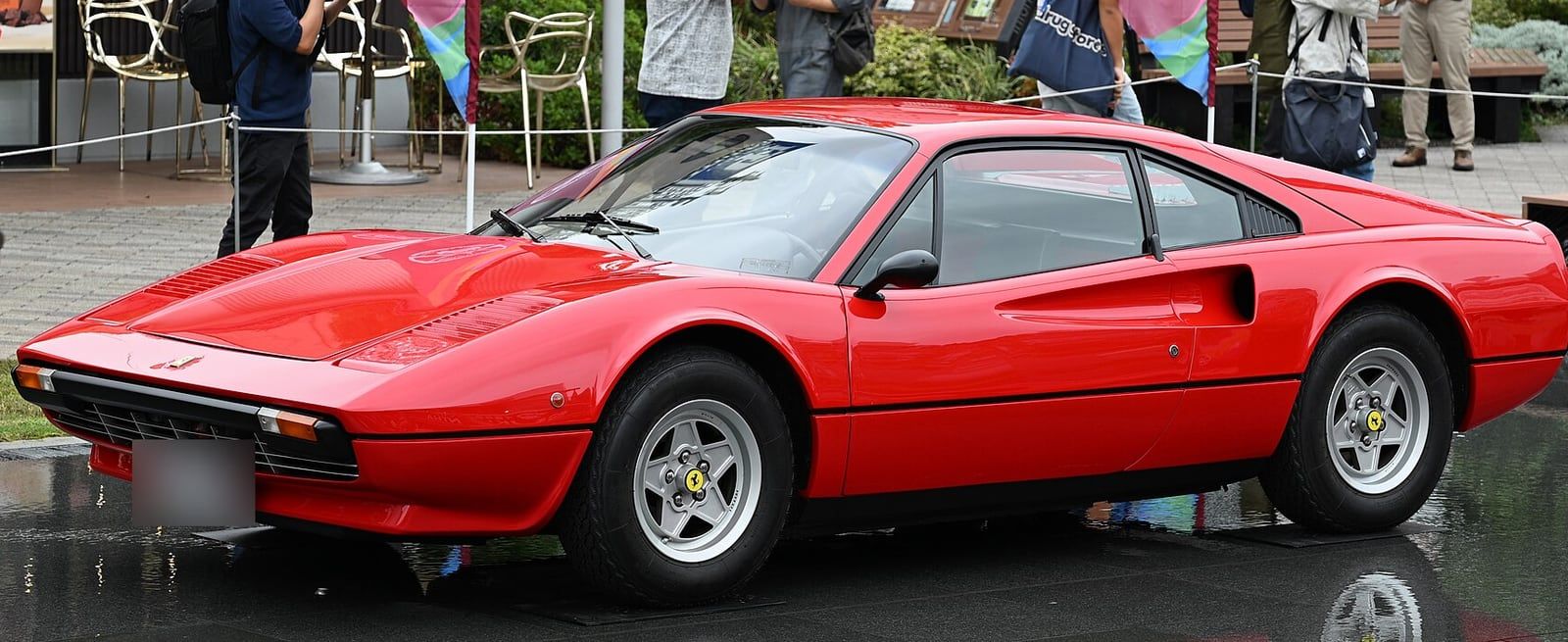
The first 308 GTBs, from 1975, had bodies made of glassfibre, vetroresina in Italian, built by Scaglietti. From mid-1977 Ferrari switched most of the upper body to steel. Ferrari puts the number of glassfibre cars at 808; other counts say 712.
Those are the cars collectors want most. Hagerty’s price guide puts a glassfibre GTB in top condition at £130,000 or more, and reckons a later steel GTB with the same engine typically costs about £50,000 less. evo’s buying guide makes the same point from the other end: steel-bodied dry-sump carburettor GTBs are £100k-plus, but the glassfibre cars are by far the most sought-after.
Either way, the earliest 308s sit above the £88,000 a good 328 GTB costs. The order turns over because their buyers are paying for something different. Not how good the car is to drive, where the 328 wins easily, but how close it is to the shape as first built, and how few of them there are. We found the same thing with the first-series Countach, which costs more than every later car that improved on it.
The honest caveat
The carburettor 308 is the car on which price guides disagree most, and it is worth knowing where our number sits. We value a good steel carburettor GTB at £75,000. evo says high-mileage steel GTBs start at around £75k but that £85k–£95k is a more realistic budget for a decent one, which is 328 money.
The spread is real rather than an error on anyone’s part. Early steel cars with the original dry-sump engine trade like the glassfibre cars’ younger siblings; later carburettor cars with patchy histories trade like any other 308. If you are comparing a well-documented early steel GTB with an average 328, the gap can close to nothing, or open the other way.
So which?
Buy the 328 if you want to use it. It has the torque, the later build quality and, in GTB form, rarity that the market already recognises. It is also the easier car to price: there is one engine, two bodies and far less argument about which is which. Whichever you choose, favour use over storage. Classic & Sports Car’s buying guide lists what a laid-up car suffers, from seizing plates in the limited-slip differential to gummed-up fuel systems, and says the car should ideally be driven at least weekly.
Buy an early 308 if what you want is the shape as first drawn, and accept that you are paying for originality more than for the drive. That means paying for proof: confirmation that a glassfibre or dry-sump car is what it claims to be, and the paperwork to show it.
On either car, the cam belts matter more than the badge. evo’s specialists change them every other annual service; ask for dated invoices and treat their absence as a cost. The detail that separates one 308 from the next, from glassfibre identification to carburettor versus QV, is what the guide is for.